General information only, not personalized financial advice. Disclaimer.
You can cut a family grocery bill by about $200 a month without coupons by doing three things: plan meals around what’s on sale, switch basics to store brands, and stop throwing food away. The rest of this guide is the how — including a four-week plan and a worked example.
Groceries are one of the few big expenses you can change this week. You don’t need to clip coupons for hours or stockpile 40 bottles of mustard.
First, know where you stand
The average U.S. household spent $6,491 on food at home in 2025 — about $541 a month — up 4.3% from 2024, according to the Bureau of Labor Statistics’ Consumer Expenditure Survey (BLS). Grocery prices rose 1.8% in the 12 months to September 2026, while restaurant prices rose 3.5% (BLS CPI). Cooking at home has been getting relatively cheaper.
For a family-size benchmark, USDA publishes the monthly cost of four food plans. Its lowest-cost level, the Thrifty Food Plan, put a family of four with two school-age children at roughly $1,000 a month in 2026 (USDA Food Plans). The other three plans (low-cost, moderate and liberal) are higher. If your family of four spends $1,400, there’s likely room to cut; if you spend $950, the easy savings may already be gone.
The receipt audit (15 minutes)
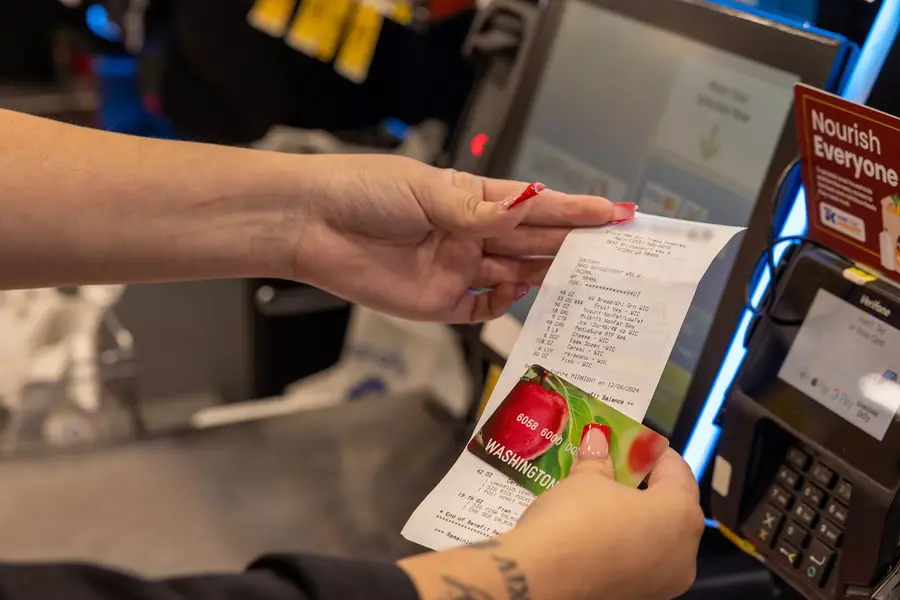
Before changing anything, take your last four grocery receipts and:
- Highlight the 10 most expensive line items across all four.
- Mark each one: planned meal, snack, convenience (pre-cut, pre-made), or impulse.
- Total each group. Convenience and impulse are usually where the first $100 is hiding.
For item-by-item replacements, see our list of cheap swaps for the 20 priciest grocery items.
Plan before you shop
1. Start with what you already have
Before writing a list, look in the fridge, freezer and pantry. Plan the first few meals around what needs using up.
2. Meal plan around the sales
Check the weekly specials (catalogs or the store app) and build meals around the discounted protein and produce — not the other way around. Protein is the place to start: the average household spent $1,579 on meats, poultry, fish and eggs in 2025, more than on fruits and vegetables ($988) or dairy ($644) (BLS).
3. Plan “leftover” nights on purpose
Cook once, eat twice. A big pot of chili on Monday becomes burritos on Wednesday.
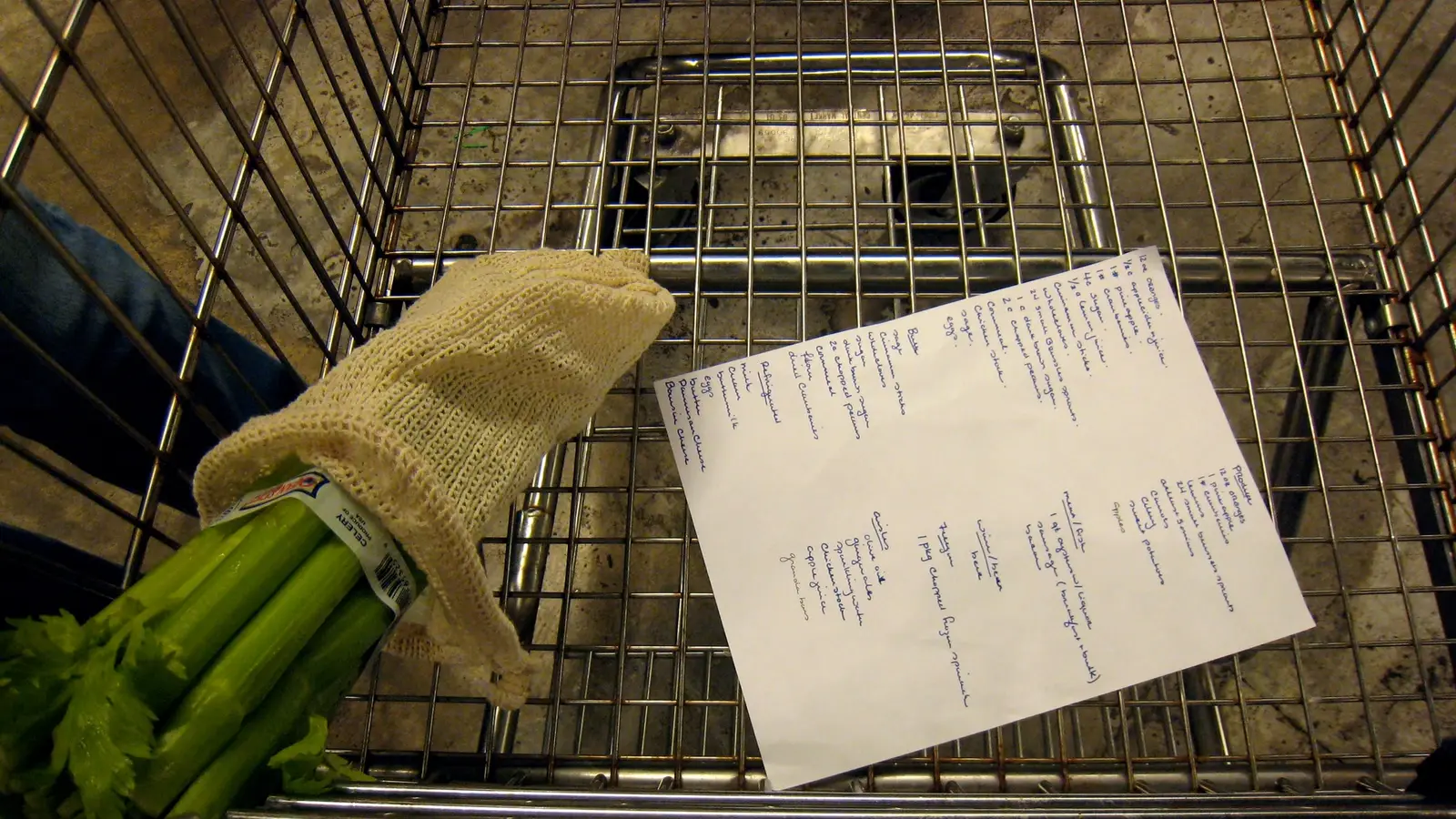
4. Make a list and stick to it
Impulse buys are where budgets go to die. Organize the list by aisle so you’re in and out faster.
Shop smarter
5. Shop less often
Every extra trip is a chance to spend $30 on things you didn’t need. Aim for one big shop a week, or even every 10 days.
6. Switch to store brands
Pasta, rice, canned goods, flour, cereal, cleaning supplies, medicine. Try the store version once — you usually won’t notice.
7. Compare unit prices
The shelf tag shows price per ounce or pound. Bigger isn’t always cheaper, and sale prices sometimes have a worse unit price than the regular large size.
8. Look high and low
The most expensive brands sit at eye level. The better deals are often on the top and bottom shelves.
9. Buy whole, not pre-cut
Whole chickens, blocks of cheese, heads of lettuce and whole fruit cost less than their pre-cut versions.
10. Try a discount grocery store
Discount grocery chains often have lower prices on the basics. Do your staples there and top up elsewhere.
11. Use pickup to beat impulse buys
Ordering for pickup means you only buy what’s on your list — no tempting end-caps. Check whether your store charges a pickup fee before you make it a habit.
Waste less
USDA estimates that 31% of the food supply went uneaten at the retail and consumer level in its 2010 baseline — about 133 billion pounds worth $161.6 billion (USDA). In a household, wasted food is money you already spent.
12. Do a monthly pantry challenge
One week a month, cook mostly from what’s at home and only buy fresh basics. It clears the shelves and saves a week’s grocery money.
13. Freeze before it goes bad
Bread, bananas, cooked rice, shredded cheese, herbs in oil, leftovers — the freezer is your best friend.
14. Read date labels correctly
“Best if Used By” describes quality, not safety, and except for infant formula, product dating isn’t required by federal law (USDA FSIS). Plenty of food gets thrown out on a date that was never about safety. Anything that smells, looks or feels off still goes.
15. Eat meatless a couple of nights a week
Beans, lentils, eggs and pasta dishes are cheap, filling and easy.
A case with numbers: $1,100 down to $900
Here’s how the habits can add up for a family of four spending $1,100 a month. These are illustrative amounts, not guarantees — your numbers depend on your store and city:
| Change | Monthly savings (example) |
|---|---|
| Store brands for 10 staples | $45 |
| Dinners built around sale protein | $50 |
| Shopping weekly instead of 2–3 times | $35 |
| One pantry-challenge week a month | $45 |
| Less food thrown out | $25 |
| Total | $200 |
That puts this family at $900 a month — still below USDA’s moderate plan, and within reach of the thrifty one.
The four-week plan
Trying all 15 habits at once is how people quit by week two. Add one layer a week:
- Week 1 — Audit and pantry. Do the receipt audit and cook from the pantry for one week. Only buy milk, eggs, bread and produce.
- Week 2 — Sales-first list. Plan five dinners from the weekly ad. Shop once, with a list.
- Week 3 — Store brands. Swap the 10 staples you buy most. Note which ones you’d switch back.
- Week 4 — Waste check. Before shopping, write down everything you threw out that week. Plan meals to use the next batch first.
At the end of the month, compare the total with your last month. That number is your real savings — not an estimate.
Keep a price book for your top 15 items
A price book is a list of the 15 things you buy most (eggs, milk, chicken, rice, coffee…) with the lowest unit price you’ve seen at each store. After a month, you’ll know a real deal from a fake one — and you’ll spot “sales” that are just the normal price with a red tag. More on that trap in is a sale costing you more?
Shopping for one or two people
Smaller households face a different problem: the cheapest unit prices come in family-size packs, and a single person can’t eat them before they spoil. What works:
- Buy the big pack, then freeze in portions. Ground meat, chicken thighs and bread split into single-meal bags the day you buy them.
- Split bulk with a friend or neighbor. A big sack of rice or a family pack of chicken costs less per pound; split it and you both win.
- Lean on long-life staples: frozen vegetables, canned beans and fish, eggs, oats, rice and pasta keep for weeks or months.
- Cook four portions, not one. Eat two, freeze two. In a month you’ll have a freezer full of your own ready meals.
- Use the salad bar for small amounts. For a recipe that needs a quarter cup of something, paying by weight can beat buying a whole package you’ll throw out.
If the budget is beyond tight
If you’ve cut everything and groceries still don’t fit, that’s not a planning failure. Food banks and pantries, SNAP and, for families with young children, WIC exist for exactly this. Your state’s SNAP office can tell you whether you qualify, and a local food bank can tell you over the phone what, if anything, to bring on a first visit.
What not to do
- Don’t drive to four stores to save $6. Fuel and time cost more than the difference. Two stores is usually the limit.
- Don’t bulk-buy perishables you can’t freeze. A cheap 5-pound bag of spinach is expensive if half of it rots.
- Don’t join a warehouse club without doing the math. If the yearly fee is $65, you need to save more than $5.42 a month on things you’d buy anyway just to break even.
- Don’t cut fruit and vegetables first. Cut convenience foods, drinks and snacks first; frozen produce is often cheaper and keeps longer.
- Don’t shop hungry. Eat something first. It’s an old tip because it works.
Put the savings to work
The money you save at the checkout only counts if it goes somewhere. Move it the same day — into your emergency fund, your cash stuffing grocery envelope’s rollover, or a square on your $5,000 savings challenge.
Fun break: how well do you remember prices? Play What did it cost in 1990? — five new items every day.
Frequently asked questions
How can I cut my grocery bill fast?
Do a one-week pantry challenge (cook from what you already have), make a list based on what's on sale, and switch to store brands for basics. Those three alone often save a noticeable amount in the first month.
What is a pantry challenge?
A pantry challenge means cooking mostly from what's already in your pantry, fridge and freezer for a week or more, only buying fresh basics like milk, eggs and produce.
How much does the average household spend on groceries?
According to the Bureau of Labor Statistics, the average U.S. household spent $6,491 on food at home in 2025, about $541 a month. Bigger households usually spend more.
What is a realistic grocery budget for a family of four?
USDA's lowest-cost food plan, the Thrifty Food Plan, put a family of four with two school-age children at roughly $1,000 a month in 2026. USDA publishes four plan levels each month, so you can compare your own spending with them.
Is it safe to eat food past the 'best by' date?
USDA explains that 'Best if Used By' is about quality, not safety, and that except for infant formula, product dating isn't required by federal law. Spoiled food should still be thrown out.
Sources
- BLS: Consumer Expenditures — 2025 (news release)
- BLS: Consumer Price Index news release
- USDA FNS: USDA Food Plans — Cost of Food monthly reports
- USDA FSIS: Food product dating
These are official, free resources. This article is general information, not personalized financial advice — for decisions about your own money, talk to a licensed professional or a nonprofit counselor.