General information only, not personalized financial advice. Disclaimer.
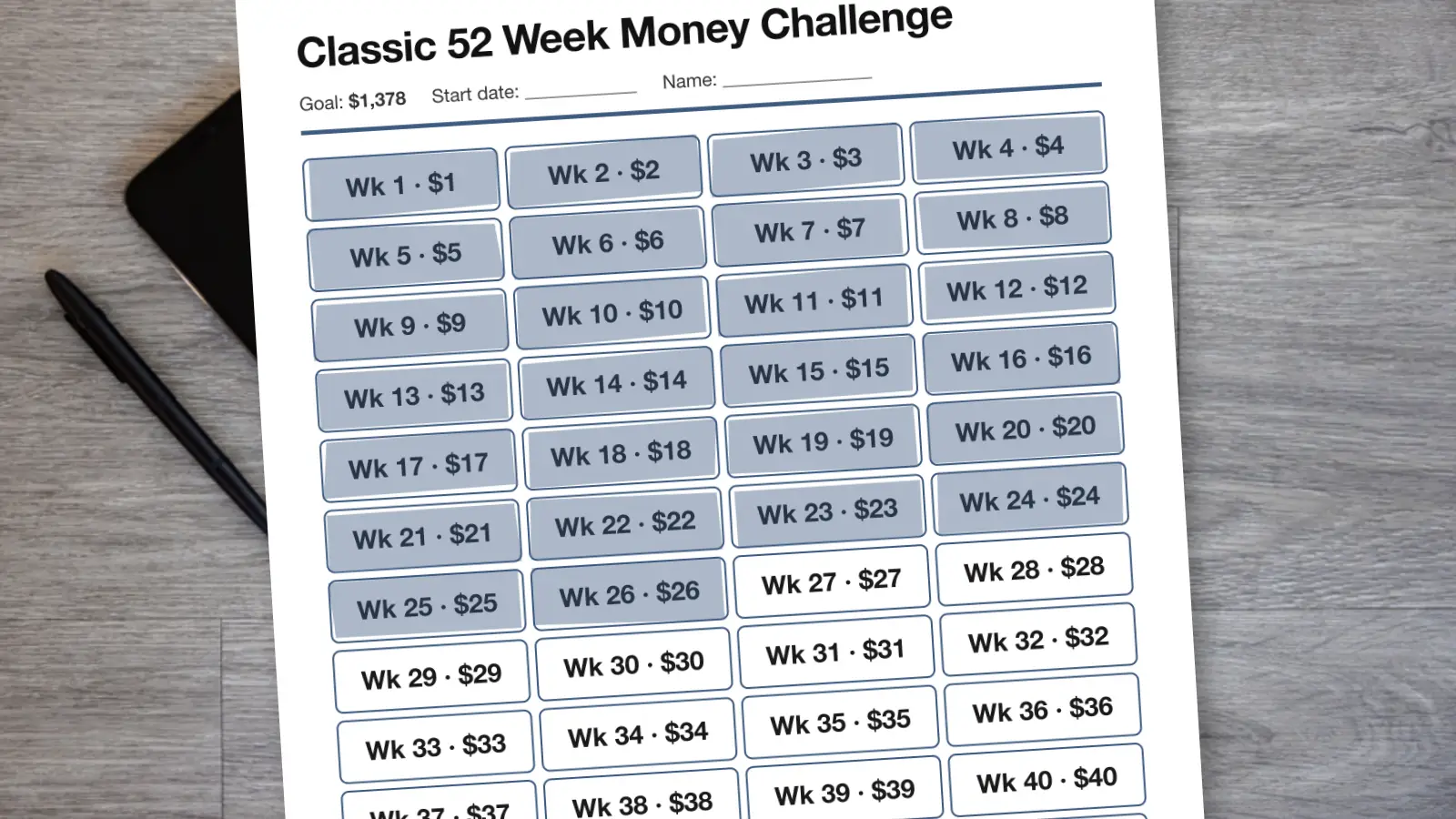
The 52 week money challenge saves $1,378 in a year: $1 in week one, $2 in week two, and so on up to $52 in week 52. Doing it in reverse — $52 first, $1 last — reaches the same total with far less risk of quitting in December.
It’s the challenge that started the whole savings-challenge craze, and it’s a great first one because the early weeks are painless. Below: the numbers behind each version, the “month 11 trap,” what to do if you’re paid every two weeks, and how to catch up after missed weeks.
The classic version, by the numbers
| Weeks | You save each week | Running total by end |
|---|---|---|
| 1–13 (Q1) | $1 → $13 | $91 |
| 14–26 (Q2) | $14 → $26 | $351 |
| 27–39 (Q3) | $27 → $39 | $780 |
| 40–52 (Q4) | $40 → $52 | $1,378 |
More than 43% of the money ($598) is saved in the last 13 weeks. That’s why so many people drop out around Thanksgiving.
Is it a trap in month 11?
Partly, yes. If you start in January, the four or five weeks of November ask for about $230, while all of January asked for about $10. That spike lands on top of holiday travel, gifts and food.
The bigger problem is what happens when people quit. Here’s how much you’d have saved if you stopped after a given week:
| You quit after week… | Classic saved | Reverse saved |
|---|---|---|
| 4 (end of January) | $10 | $202 |
| 9 (early March) | $45 | $432 |
| 13 (end of Q1) | $91 | $598 |
| 26 (halfway) | $351 | $1,027 |
| 39 (end of September) | $780 | $1,287 |
| 47 (Thanksgiving week) | $1,128 | $1,363 |
Quit at the halfway point and the reverse version has saved nearly three times as much. For a dated, week-by-week calendar of the classic layout, see the 52 week savings challenge 2027 chart.
The reverse 52 week challenge (our favorite)
Flip it: start with $52 in week one and finish with $1 in week 52. Same $1,378, but:
- You do the heavy lifting in January and February, when New Year motivation is strongest.
- The end of the year — holidays, gifts, travel — only asks for a few dollars a week.
- If you quit halfway, you’ve still saved about 75% of the money.
Our printable 52-week chart works both ways: just start at the bottom.
The honest downside: January is also when holiday credit card bills arrive. If your January is already stretched, the flat version below may suit you better.
Every version side by side
| Version | Week 1 | Last week | Year total | Hardest stretch |
|---|---|---|---|---|
| Classic | $1 | $52 | $1,378 | Oct–Dec |
| Reverse | $52 | $1 | $1,378 | Jan–Mar |
| Flat | $26.50 | $26.50 | $1,378 | None |
| Biweekly pairs | $53 per payday | $53 per payday | $1,378 | None |
| Double (×2) | $2 | $104 | $2,756 | Oct–Dec |
| Times five (×5) | $5 | $260 | $6,890 | Oct–Dec |
| 365-day penny | 1¢ a day | $3.65 a day | $667.95 | December |
The flat version is the least exciting and the most predictable: $26.50 every week. If the point is the money rather than the game, it’s hard to beat.
Paid every two weeks? Use the $53 pairing
Instead of saving week by week, shade two boxes every payday and pair the biggest remaining week with the smallest:
- Payday 1: week 1 + week 52 = $53
- Payday 2: week 2 + week 51 = $53
- Payday 3: week 3 + week 50 = $53
- …and so on for 26 paydays
Every payday costs exactly $53, and the chart still gets fully shaded by the end of the year.
Classic vs. reverse: the interest difference
Because the reverse version puts money in the bank earlier, it earns more interest on the same deposits. Weekly deposits for one year:
| Account APY | Classic interest | Reverse interest |
|---|---|---|
| 0.38% (FDIC national average savings rate, Oct. 2026) | ~$1.81 | ~$3.52 |
| 4% | ~$18.90 | ~$36.92 |
The 0.38% figure is the national average savings rate the FDIC published for October 2026; the 4% row is a simple comparison, not a quote from any bank. You can run your own numbers with the SEC’s compound interest calculator on Investor.gov. Either way, interest is a bonus — the habit is what you’re building.
The 365 day penny challenge
Want something smaller and daily? Save 1¢ on day one, 2¢ on day two, up to $3.65 on day 365. Total: $667.95.
It has its own small month-11 problem: January adds up to just $4.96, while December asks for $108.50. The first 90 days total only $40.95. Two fixes:
- Reverse it and start with $3.65 a day in January.
- Tick any box on any day. The 365-day penny tracker is built for this: do the big numbers on good days, the pennies on tight ones.
It’s great for kids, and for building a daily habit of checking in with your money.
Starting late? Move the hard weeks, not the deadline
Nothing says week 1 has to be in January. When you start decides where the expensive last quarter of the classic version ($598) lands:
| Classic started in… | Weeks 40–52 ($40–$52) land in… |
|---|---|
| January | October – December (holidays) |
| April | January – March (holiday card bills) |
| July | April – June (tax season, for some) |
| October | July – September (summer) |
| Mid-November | Mid-August – mid-November (finishes before Thanksgiving) |
So if you’re reading this in the fall, starting the classic version now is a perfectly good plan: the big weeks fall next summer and early fall, and you’re done before the next holiday season.
Two other late-start options:
- The 26-week half: weeks 1–26 only, for $351. Double the amounts ($2 to $52) and it’s $702 in six months.
- Reverse from January: use the rest of this year to build a small buffer, then start $52 in the first week of January.
Missed weeks? Here’s the catch-up math
Don’t restart. Add up what you missed and spread it out:
- Add the missed weeks. Missing weeks 17–20 of the classic version = 17 + 18 + 19 + 20 = $74.
- Pick a catch-up window. Eight weeks is gentle.
- Divide. $74 ÷ 8 = $9.25 extra per week until you’re back on track.
If you’ve fallen behind by more than a quarter, switching to the flat $26.50 version for the rest of the year is simpler than chasing the chart.
Make it automatic, step by step
The CFPB notes that automatic transfers make saving easier because you don’t have to remember to do it (CFPB).
- Open or label a separate savings account — “52 Weeks” works. Check that the bank is FDIC-insured; deposits are covered up to $250,000 per depositor, per insured bank, per ownership category (FDIC).
- Schedule a recurring transfer for the day after payday.
- For rising amounts, set the transfer monthly and raise it on the 1st (for example $10, then $26, then $42 in a classic year — four weeks of deposits at a time).
- For the flat or $53 version, set it once and leave it.
- Shade the chart when the transfer lands.
Which version should you pick?
- Brand new to saving? The penny challenge or classic 52-week.
- Want to finish without stress in December? The reverse 52-week.
- Want the same amount every time? Flat $26.50 a week, or $53 per biweekly payday.
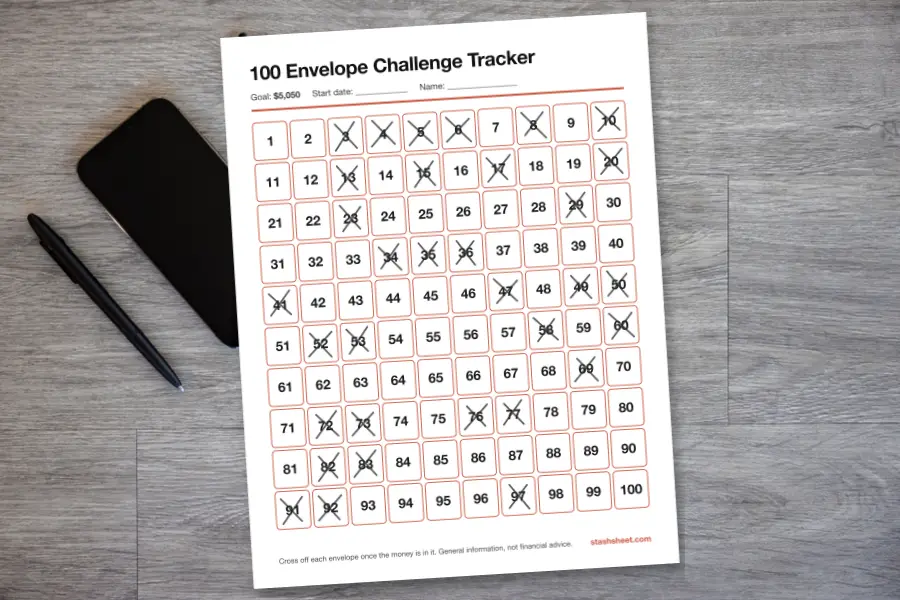
- Ready for a bigger number? Jump to the $5,000 in 52 weeks challenge or the 100 envelope challenge.
Myths vs. reality
“You have to start in January.” Any week works, and starting in the fall can actually move the big weeks away from the holidays.
“The reverse version is harder.” It’s harder in the first quarter and much easier after that. Over the whole year, it’s the same $1,378.
“Missing a week means you failed.” It means you have a catch-up of a few dollars a week for a while. Restarting from week 1 throws away the progress you made.
“The interest makes it worth doing in a high-rate account.” The interest is small either way — a few dollars to a few dozen. Pick an account for safety and convenience; the deposits are what count.
“It’s too small to matter.” $1,378 covers many common emergencies, like a car repair or an urgent trip. And the habit of saving weekly is what makes the next, bigger goal possible.
Mistakes that end most challenges
- Restarting after a missed week. Use the catch-up math instead.
- Saving into your checking account. If the money sits next to your spending money, it gets spent.
- Doubling up before you’ve finished once. A completed $1,378 is worth more than an abandoned $6,890.
- Ignoring December. If you choose the classic version, plan now for $250 in the last five weeks.
- Hiding the chart in a drawer. Fridge, bathroom mirror or phone wallpaper.
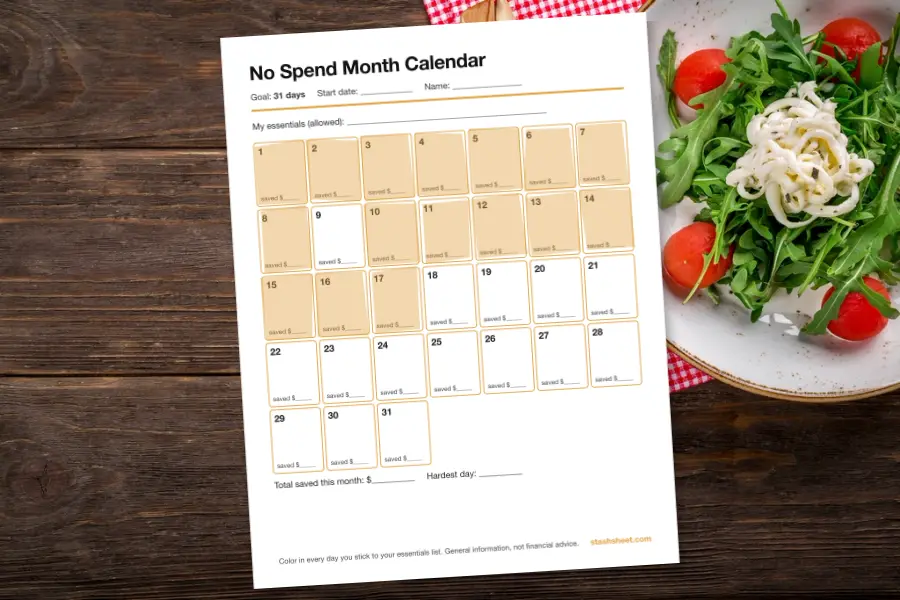
Pair it with a no-spend weekend each month — the money you don’t spend covers that week’s amount. Our no-spend challenge guide explains how.
Prefer your phone? Track every week with the free interactive 52-week challenge tracker — it saves your progress on your device.
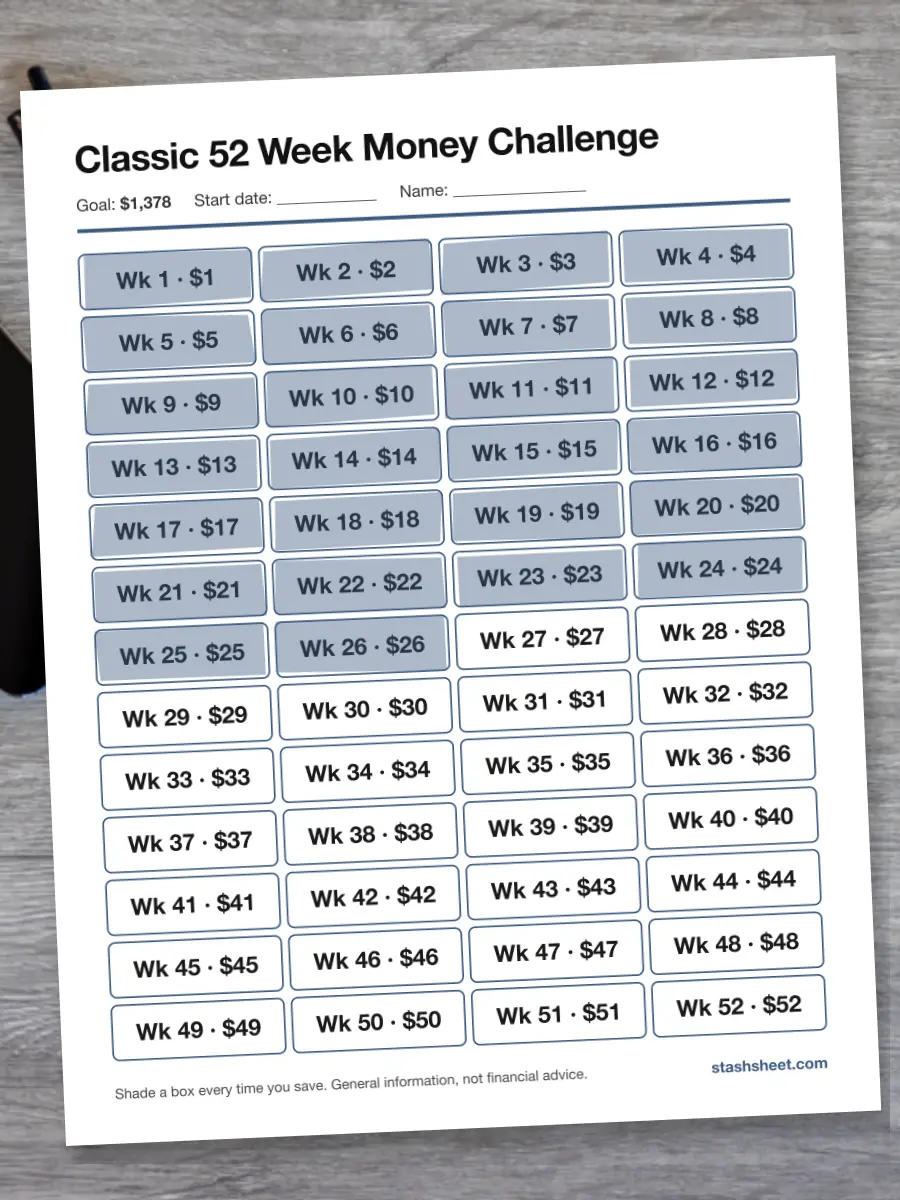
Classic 52 Week Money Challenge
Save $1 in week 1, $2 in week 2 … $52 in week 52. Feeling strong in January? Do it in reverse and start with $52. Free one-page PDF, no email needed.
Download free PDF PreviewFrequently asked questions
How much do you save in the 52 week money challenge?
The classic version (save $1 in week one, $2 in week two, up to $52) totals $1,378.
Is the reverse 52 week challenge better?
For many people, yes. You start with $52 in January, when motivation is high and before holiday spending, and finish with $1 in December when money is tight. If you quit at the halfway point, the reverse version has already saved $1,027 versus $351 for the classic.
How much is the 365 day penny challenge?
Saving one cent on day one, two cents on day two and so on up to $3.65 on day 365 adds up to $667.95.
How much is the 52 week challenge if I'm paid every two weeks?
Pair a big week with a small one (week 1 + week 52, week 2 + week 51, and so on). Each pair adds up to $53, so you save the same $53 every payday for 26 paydays.
Is there a version with the same amount every week?
Yes. Saving $26.50 every week for 52 weeks also reaches $1,378, with no rising amounts and no December crunch.
What happens if I miss a few weeks?
Don't restart. Add up the missed weeks and spread them over the next several weeks. Missing weeks 17 to 20 of the classic version means $74 to make up, or about $9.25 extra a week for eight weeks.
Sources
- CFPB: Looking for an easy way to save money? Make it automatic
- FDIC: National rates and rate caps (national average savings rate)
- FDIC: Understanding deposit insurance
- Investor.gov (SEC): compound interest calculator
These are official, free resources. This article is general information, not personalized financial advice — for decisions about your own money, talk to a licensed professional or a nonprofit counselor.