General information only, not personalized financial advice. Disclaimer.
A no spend challenge is exactly what it sounds like: for a set time, you stop spending money on anything that isn’t essential. No takeout, no “just browsing” online, no $6 coffees. It’s a reset button for your spending habits — and January is the most popular month to try it.
The secret to finishing isn’t willpower. It’s clear rules written down before you start.
Step 1: Pick your length
- No-spend weekend — a great first try. Friday night to Sunday night.
- No-spend week — enough to notice your habits.
- No-spend month — the big one. Usually saves the most and changes habits for good.
First time? Do a weekend, then a week, then a month.
Step 2: Write your “allowed” list
These are the things you will pay for. Typical essentials:
- Rent or mortgage, utilities, phone, internet
- Insurance and debt payments
- Groceries (with a set budget)
- Fuel or public transport for work and school
- Medicine and anything health-related
- Childcare and school costs
- Gifts already planned (birthdays don’t stop for your challenge)
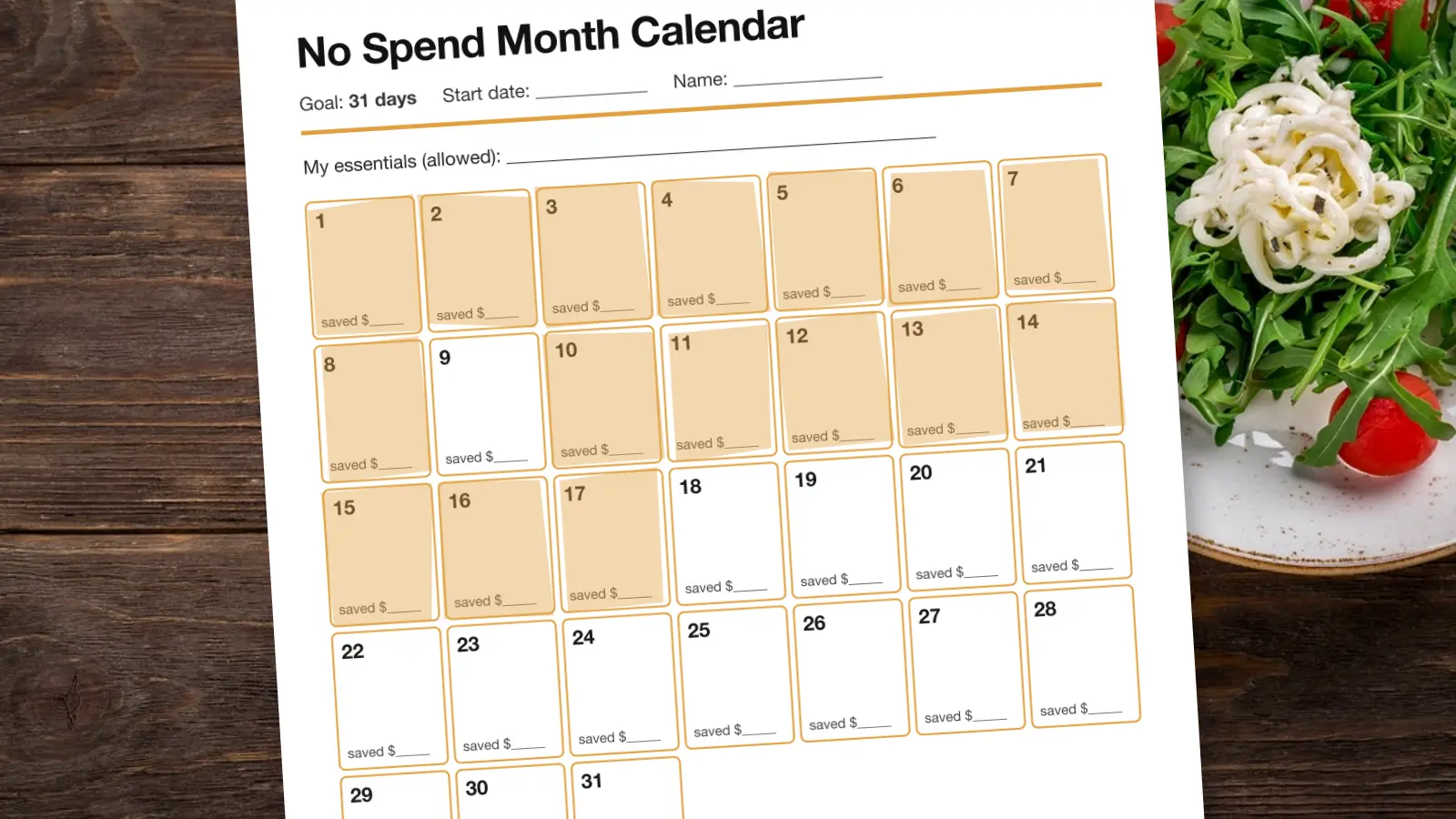
Write it on your free no-spend calendar so there’s no arguing with yourself later.
Step 3: Write your “not allowed” list
Be specific. Vague rules get broken.
- Takeout, delivery and eating out
- Coffee shops and drive-throughs
- Clothes, shoes, home décor
- Online shopping “deals”
- New books, games, apps and subscriptions
- Beauty products beyond replacing what runs out
Step 4: Decide on gray areas now
These are where most challenges fall apart:
| Gray area | A rule that works |
|---|---|
| Social plans | Say yes to free plans; suggest a potluck or walk instead of dinner out. |
| Something breaks | Replace only if needed for work, health or safety. |
| Kids’ activities | Already-paid activities are fine; no new sign-ups. |
| Gifts | Only planned ones, with a set budget. |
| Running out of shampoo | Replace with the cheapest version, no upgrades. |
Free things to do instead
Boredom is the real enemy. Have a list ready:
- Library: books, movies, e-books, sometimes even museum passes
- Hikes, beaches, parks, bike rides
- Board game night or cards with friends
- Batch-cook and freeze meals for next month
- Declutter and list things to sell (bonus: money in)
- Free community events, outdoor concerts, open days
- “Shop” your pantry and freezer for a week of meals
Track every win
Each day you stick to it, color in the day on your calendar and write down roughly what you didn’t spend. Skipped lunch out? Write $14. Didn’t buy that top in your cart? $32. At the end of the month, add it up — that number is wildly motivating.
Then move that money to savings the same day. Otherwise it quietly evaporates.
What if you slip?
You will. Everyone does. One coffee doesn’t erase 20 good days. Note it, figure out what triggered it (tired? bored? an app notification?), and keep going. If a trigger keeps showing up, remove it: delete the shopping app, unsubscribe from store emails, take a different route home.
After the challenge
The best part of a no-spend month is what you learn. Look back and ask:
- What did I not miss at all? → Cut it for good.
- What did I really miss? → Budget for it on purpose.
- How much did I save? → Put it toward a savings challenge or your emergency fund.
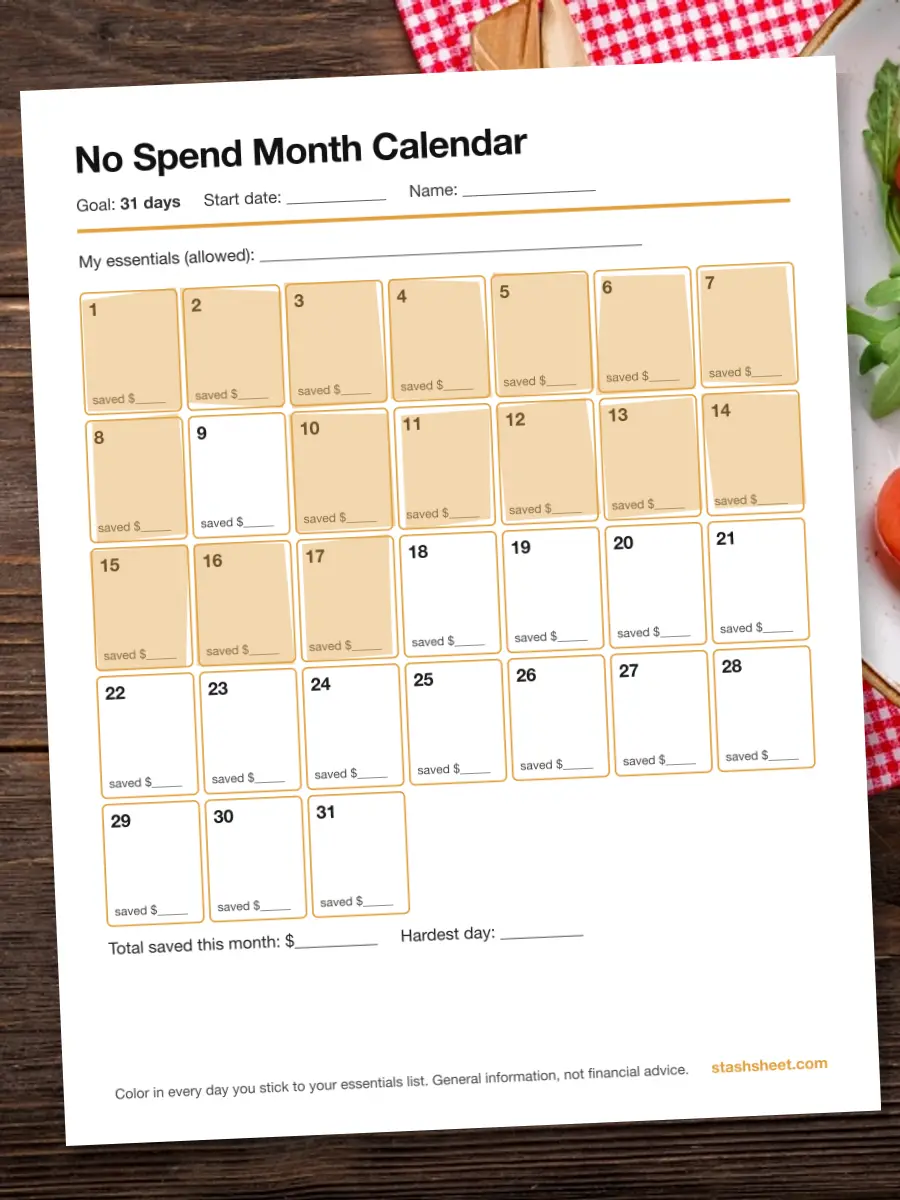
No Spend Month Calendar
Color in every day you buy nothing outside your essentials list. Write what you saved underneath and total it at the end. Free one-page PDF, no email needed.
Download free PDF PreviewFrequently asked questions
What is a no spend challenge?
A set period — a weekend, a week or a month — where you only spend money on essentials you decide on in advance, like rent, bills, groceries and fuel.
Are groceries allowed in a no spend month?
Usually yes. Most people allow a set grocery budget and ban takeout, snacks on the go and impulse buys.
How much can you save in a no spend month?
It varies a lot. Many people save between $200 and $600 by cutting takeout, coffee runs, online shopping and small impulse buys.
Sources
- CFPB: spending tracker worksheet (PDF)
- CFPB: Your Money, Your Goals toolkit (budget, bill calendar and spending worksheets)
These are official, free resources. This article is general information, not personalized financial advice — for decisions about your own money, talk to a licensed professional or a nonprofit counselor.